Fine-tuning is the process of taking an already-trained AI model and giving it extra training on a specific set of examples so it becomes an expert at one particular job. Think of it as sending a general doctor back to medical school to become a specialist — the broad knowledge stays, but new skills are added on top.
How It Works
A general-purpose AI model knows a little about everything but isn’t an expert in your specific task. Fine-tuning fixes that with a second, smaller round of training. You feed the model hundreds or thousands of examples of exactly what you want — customer support chats in your brand’s voice, legal contracts in your format, medical notes in proper style — and it adjusts its internal settings to match.
Think of hiring a smart generalist and then training them for your company. They arrive with broad knowledge (the pre-trained model). Over a few weeks of shadowing your team (fine-tuning on your examples), they learn your terminology, your customers, and your way of doing things. They didn’t go back to school for four years — they just specialized.
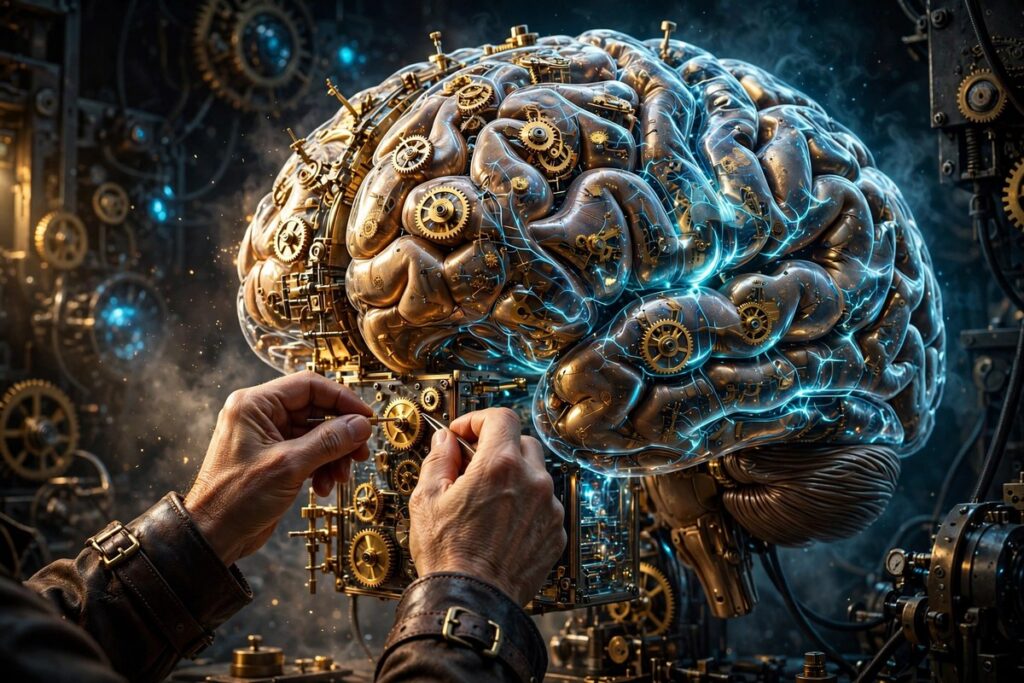
Technically, fine-tuning tweaks the model’s existing weights rather than starting from zero, which is why it needs far less data and computing power than training a model from scratch. Modern methods can even fine-tune large models on a single powerful computer by updating only a small fraction of the model’s parameters.
Why It Matters
Fine-tuning is how generic AI becomes genuinely useful for specialized work. A hospital can fine-tune a model on medical terminology; a law firm on contract language; a game studio on its art style. The result follows instructions more reliably, uses the right vocabulary, and makes fewer embarrassing mistakes in the domain.
It’s also a competitive advantage. While everyone has access to the same base models, your fine-tuned model — trained on your data — is uniquely yours. That’s why companies invest in it: the model learns things competitors’ models simply don’t know.
Real-World Example
An online retailer fine-tunes a chatbot on 5,000 of its past support conversations. Before fine-tuning, the bot gave generic answers and didn’t know the return policy. Afterward, it answers in the brand’s friendly tone, quotes the actual 30-day return window, and knows which products are final sale. Support tickets handled without humans jump, and customers can’t tell the difference.
Popular AI Tools
These platforms make it possible to work with models you can adapt and fine-tune:
- HuggingChat — chat with open models from Hugging Face, the home of customizable AI.
- ChatGPT — OpenAI offers a fine-tuning API to specialize its models on your data.
- Claude — Anthropic provides customization options for business-specific behavior.
Frequently Asked Questions
How is fine-tuning different from training a model from scratch?
Training from scratch means teaching a model everything — language, facts, reasoning — which takes massive data and computing power. Fine-tuning starts from an already-capable model and only teaches the specialty, needing far less of both.
How much data do I need to fine-tune?
It depends on the task, but often a few hundred to a few thousand good examples are enough. Quality beats quantity: clean, consistent examples teach the model faster than a mountain of messy ones.
Can fine-tuning make a model worse?
Yes, if done badly. Poor-quality or biased examples teach bad habits, and over-training can make the model forget general skills — a problem called catastrophic forgetting. Careful data curation and testing prevent this.
Is fine-tuning the same as giving the AI examples in a prompt?
Related but different. Putting examples in a prompt (few-shot prompting) guides one conversation and is forgotten afterward. Fine-tuning permanently bakes the pattern into the model, so it behaves that way every time.