A diffusion model is an AI system that creates images by starting with pure visual noise — like TV static — and gradually removing it until a clear picture appears. Guided by a text description, it repeats this cleaning step hundreds of times, slowly shaping random pixels into detailed, realistic, or artistic images.
How It Works
A diffusion model learns to create images through a two-phase process. First, during training, it takes real images and gradually adds random noise until they become pure static — then learns to reverse the process, removing noise step by step to recover the original picture. After seeing millions of examples, it becomes an expert at “denoising.”
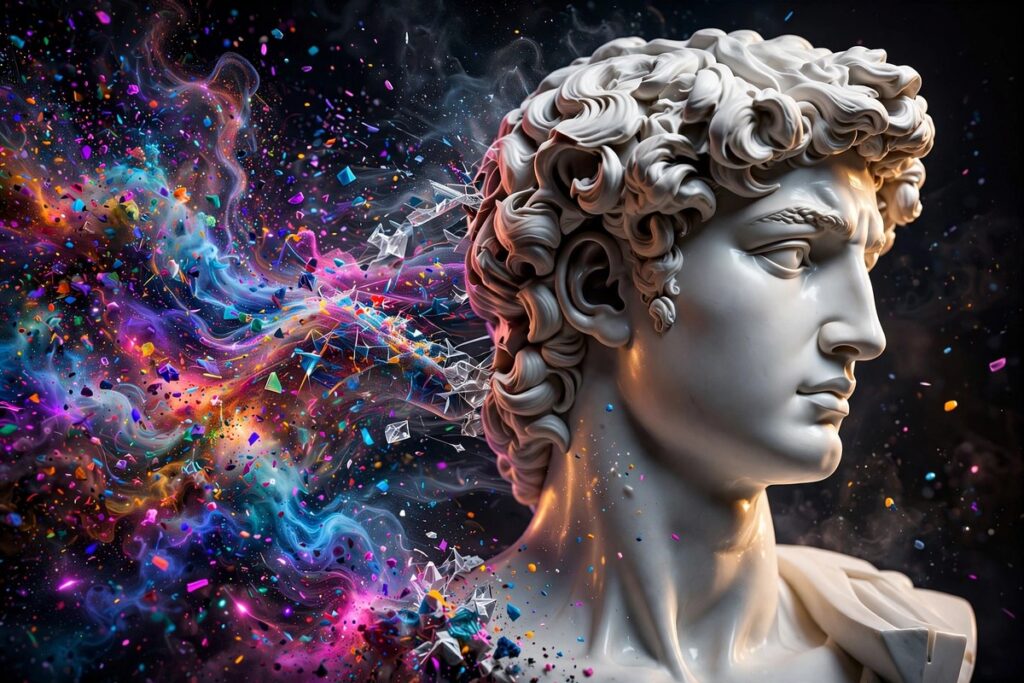
Imagine a sculptor who starts with a block of marble full of random cracks (the noise) and chips away until a statue emerges. Now imagine the sculptor works in reverse: they’re shown the finished statue hidden in static, and must reveal it. A diffusion model does this hundreds of times in tiny steps, guided by your text prompt telling it what statue to find.
When you type “a lighthouse at sunset in watercolor style,” the model starts from pure noise and repeatedly asks: “given this prompt, what should this look like with a little less noise?” Each step sharpens the image — shapes emerge, then details, then textures — until a finished picture appears. The text guides every step, steering the noise toward your description.
Why It Matters
Diffusion models put professional-quality image creation in everyone’s hands. Marketing teams mock up campaign visuals in minutes, authors illustrate their books, game developers prototype characters, and hobbyists explore artistic styles they’d never master by hand. What once required years of training or expensive photoshoots now starts with a sentence.
They’ve also become a serious creative industry. AI-generated imagery now appears in advertising, film concept art, and product design. And the technology keeps improving — today’s models handle text in images, realistic hands, and consistent characters far better than the first generation did.
Real-World Example
A bakery owner needs a logo and social media images but can’t afford a designer yet. She types “cute cartoon croissant mascot waving, warm colors, simple flat design” into an image generator. In under a minute she has four options, picks her favorite, and uses it on Instagram that afternoon. Later, when revenue grows, she hires a designer to refine it — but the AI got her launched.
Popular AI Tools
The most popular AI image generators all run on diffusion models:
- Midjourney — beloved for stunning, artistic, highly detailed imagery.
- DALL-E 3 — OpenAI’s model, excellent at following complex prompts.
- Stable Diffusion — the open-source powerhouse behind countless apps.
Frequently Asked Questions
How is a diffusion model different from a GAN?
Both generate images, but differently. GANs use two competing networks (a generator vs. a detector). Diffusion models learn to reverse a noise-adding process, gradually refining static into an image. Diffusion currently produces the most detailed, controllable results.
Do I own the images I generate?
It depends on the tool’s terms of service — many grant you commercial rights to images you create, while free tiers may differ. Always check the specific platform’s policy before using AI images commercially.
Why do AI images sometimes have weird hands or text?
Hands and text are intricate details that are hard to get right through gradual denoising. Models have improved enormously, but complex fine details can still glitch — a telltale sign of AI generation.
Can diffusion models make videos too?
Yes — video diffusion models apply the same idea across frames, generating short clips from text prompts. The technology is newer than image generation but advancing quickly.