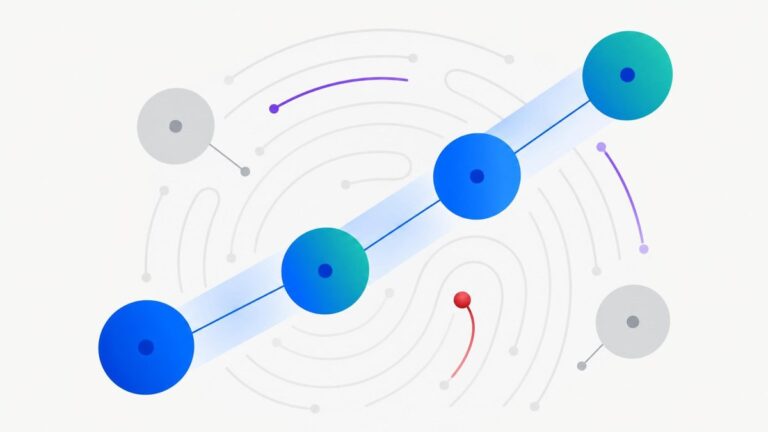

Transfer learning is a technique where an AI model trained on one task reuses what it learned for a related task. Instead of training from scratch, developers start with a pre-trained model and fine-tune it on a smaller dataset. It is like hiring an experienced chef to learn a new cuisine instead of training a cook from zero.
How It Works
Imagine hiring a chef who has cooked Italian food for twenty years to open a Thai restaurant. You would not teach them how to hold a knife or what heat does to garlic; you would only teach them Thai flavors and techniques. Transfer learning applies the same logic to AI. A model trained on a massive general task already understands fundamentals, so adapting it to your specific task takes far less effort.
In practice, developers start with a pre-trained base model, one that has already learned general patterns from enormous amounts of data, and then fine-tune it: a short additional round of training on a smaller, task-specific dataset. The early layers, which learned general features like grammar or visual edges, mostly stay as they are, while the later layers adjust to the new specialty.
This shortcut saves three precious resources at once: data, computing power, and time. Training a top-tier model from scratch can take months and a fortune in hardware; fine-tuning an existing one can take hours on a single powerful computer. That efficiency is why transfer learning quietly powers most real-world AI products.
Why It Matters
Transfer learning is what makes AI accessible to everyone except the tech giants. A small startup cannot afford to train a foundation model, but it can fine-tune an open one on its own data and get a custom AI assistant, a specialized image recognizer, or a legal document analyzer. The giants do the heavy lifting once; thousands of teams build on top.
It also means you benefit from transfer learning without ever touching it. Every chatbot fine-tuned to be helpful, every photo app that recognizes your specific dog breed, every translation tool tuned for medical terms: all of them stand on the shoulders of a pre-trained model. When AI feels surprisingly good at a niche task, transfer learning is usually why.
Real-World Example
A mid-sized company wants a support chatbot that knows its products inside out. Training a language model from scratch is out of the question: too expensive, too slow, and they lack billions of training documents. Instead, they take a strong open base model and fine-tune it on a few hundred pages of their help center, manuals, and past support tickets.
Within days they have a chatbot that speaks fluently, because the base model already knew language, and answers product questions accurately, because fine-tuning taught it the company’s specifics. The whole project costs a fraction of full training and needs a dataset small enough to fit in a folder. That is transfer learning turning an impossible project into a routine one.
Popular AI Tools
- Jasper – a marketing copy platform built by fine-tuning large base models for brand voice and campaigns.
- Copy.ai – generates sales and marketing content using models adapted for business writing tasks.
- Frase – an SEO content tool built on language models fine-tuned for research and writing workflows.
Frequently Asked Questions
What is the difference between transfer learning and fine-tuning?
Transfer learning is the overall strategy of reusing a trained model for a new task; fine-tuning, doing extra training on task-specific data, is the most common way to carry it out.
When does transfer learning fail?
When the new task is too different from the original training. A model trained on English text will not transfer well to analyzing X-ray images; the fundamentals it learned simply do not apply.
Do I use transfer learning as an everyday AI user?
Indirectly, yes. Nearly every specialized AI tool you use, from support chatbots to writing assistants, is a fine-tuned version of a larger base model. You get the benefits without doing the work.
Is transfer learning the same as zero-shot learning?
No. Transfer learning involves additional training on new data, while zero-shot learning means the model handles a new task with no extra training or examples at all.