
LoRA (Low-Rank Adaptation) is a technique for customizing a large AI model without retraining the whole thing. Instead of updating billions of parameters, it trains a tiny add-on — often under 1% of the model's size — that steers the model toward a new style, skill, or subject.
How It Works
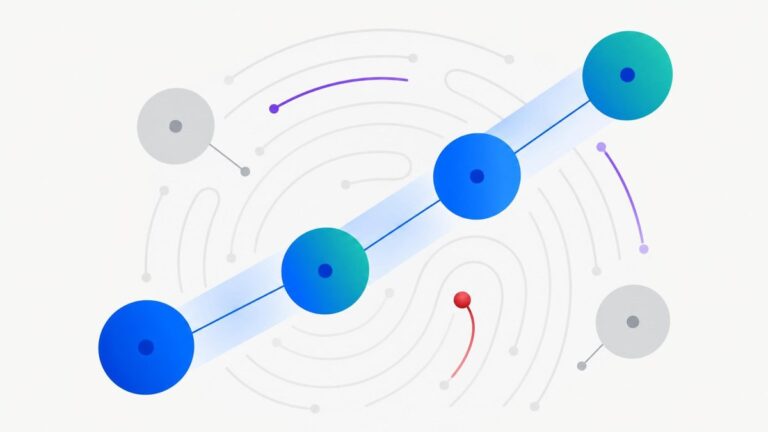
Imagine buying a tailored suit versus getting a few alterations. Retraining an entire AI model is like commissioning a whole new suit: expensive and slow. LoRA is the alteration: the original model stays frozen, untouched, and you train only a small set of extra weights — the “adapter” — that sits on top. During use, the adapter’s adjustments are blended into the model’s responses, nudging it in the new direction.
The clever part is the math trick behind the name. The adapter represents the changes as two small matrices multiplied together instead of one huge one — the “low-rank” part — which is why it needs so few trainable numbers. A LoRA adapter for a big model might be just tens of megabytes, compared to tens of gigabytes for the full model. You can train one on a single consumer GPU in hours instead of needing a data center for weeks.
Adapters are also swappable. You can train one LoRA for writing poetry, another for medical Q&A, and another for your company’s support tone — then plug whichever you need into the same base model, or even combine several. This modularity is why LoRA became the standard way hobbyists and companies customize open models.
Why It Matters
LoRA put AI customization within reach of ordinary people and small teams. Before it, fine-tuning a large model required serious hardware and budget; now a freelancer can teach an open model their client’s brand voice on a gaming PC. It also keeps things efficient: one base model plus many tiny adapters is far cheaper to store and serve than dozens of fully fine-tuned copies. For businesses, it means personalized AI without the enterprise price tag.
Real-World Example
A small game studio wants NPC dialogue in the voice of a gruff sea captain. Retraining a whole language model would cost thousands of dollars in compute. Instead, they collect a few thousand lines of pirate-style dialogue, train a LoRA adapter on a rented GPU over a weekend, and attach it to an open-source chat model. The adapter file is under 100 MB, loads in seconds, and every NPC now talks like a sailor — while the base model underneath is unchanged and can be reused for other characters with different adapters.
Popular AI Tools
LoRA is widely used in the open-source and image-generation world — explore related tools here:
- Stable Diffusion — the open image model with a huge community sharing LoRA adapters for art styles, characters, and objects.
- HuggingChat — built on open models from Hugging Face, where LoRA fine-tuning is a standard customization method.
- DeepSeek — its open-weight models are popular bases for LoRA fine-tuning by developers and researchers.
Frequently Asked Questions
What does LoRA stand for?
Low-Rank Adaptation. “Low-rank” refers to the mathematical shortcut — using two small matrices — that keeps the adapter tiny while still capturing the important changes.
Is LoRA as good as full fine-tuning?
For most customization tasks — style, tone, domain knowledge — LoRA matches full fine-tuning closely. For fundamentally changing what a model knows or teaching entirely new capabilities, full fine-tuning can still have an edge.
Can I use multiple LoRAs at once?
Yes, adapters can often be stacked or blended — for example, one for an art style plus one for a specific character in image generation. Results vary, and some combinations work better than others.
Do I need to be a programmer to use LoRA?
Not necessarily. Many no-code tools and community apps let you train or download LoRA adapters with a few clicks, especially for image models. Training from scratch still helps to understand the basics, though.