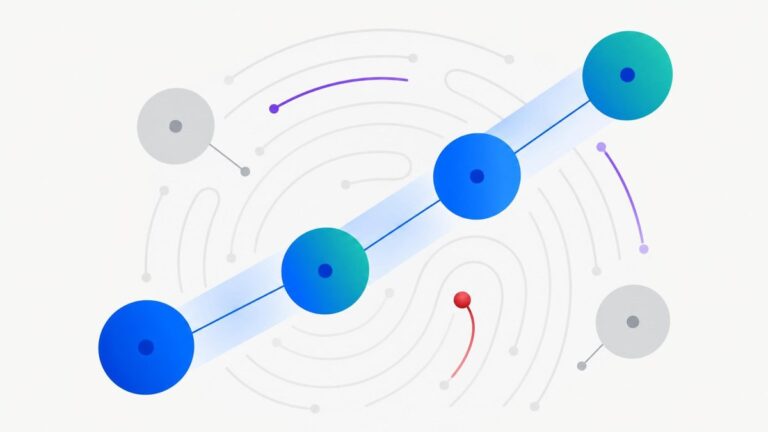

Multimodal AI is artificial intelligence that can understand and work with more than one type of input at the same time, such as text, images, audio, and video. Instead of handling only words, it can look at a photo, listen to a voice note, and answer a question about both together, much like a person does.
How It Works
Think about how you experience the world: you see, hear, read, and speak all at once, blending every sense into one understanding. Traditional AI was single-sense — a chatbot read text, an image classifier saw pictures, but neither could do both. Multimodal AI trains one model on many data types together, so it builds a shared understanding: it learns that the word “dog,” the sound of barking, and a photo of a dog all point to the same idea.
Under the hood, each input type gets converted into a common internal language the model understands. Text becomes tokens, images become small patches, audio becomes numbers describing sound waves. Once everything speaks the same numerical language, the model can connect ideas across senses — describing what is funny about a meme image, or answering a spoken question about a chart shown on screen.
Training this way is harder and more expensive than training a text-only model, because the system must learn each sense and the links between them. But the payoff is flexibility: instead of chaining five separate tools together, one model can take a photo plus a question and return a single smart answer.
Why It Matters
Human communication is naturally multimodal. We point at things while we talk, share photos with captions, and read body language during conversations. AI that only handles text misses most of this richness. Multimodal systems feel more natural because they meet us where we already are — we can show instead of just telling.
It also unlocks practical abilities: describing images for visually impaired users, reading charts aloud, translating photographed signs, and helping doctors combine scan images with written notes. Any task where meaning lives across formats becomes easier when one model sees the whole picture, literally and figuratively.
Real-World Example
A traveler in a foreign market photographs a street-food stall sign she cannot read, then asks her AI assistant by voice: “What is this dish, and is it spicy?” The model reads the text in the photo, recognizes the dish from its appearance, hears her question, and replies in speech: it is a local noodle soup, traditionally mild.
Three senses — vision, language, and audio — worked together in one seamless exchange. A text-only chatbot could never have read the sign; an image-only tool could never have answered the question. The multimodal assistant handled the entire real-world moment the way a knowledgeable local friend would.
Popular AI Tools
The leading AI assistants today are all multimodal, accepting text, images, and often voice in a single conversation:
- Gemini — Google’s model family built from the ground up to reason across text, images, audio, and video.
- ChatGPT — OpenAI’s assistant, which can analyze uploaded photos, hear voice input, and discuss visual content.
- Claude — Anthropic’s assistant with strong image understanding alongside its text abilities.
Frequently Asked Questions
What does “modality” mean in AI?
A modality is simply a type of data — text, images, audio, video, or sensor readings. A “multimodal” model handles several of these at once, while a “unimodal” model handles just one, like a chatbot that only reads text.
Is multimodal AI better than single-purpose AI?
For flexibility, yes — one model can handle mixed real-world tasks. But specialized single-purpose models can still win on accuracy or speed for narrow jobs, like a dedicated medical imaging system. The right choice depends on the task.
What are the limits of multimodal AI today?
These models can misinterpret images, hallucinate details that are not there, and struggle with long videos or complex documents. They are impressive but not perfect — always double-check important results.
Do I need special hardware to use multimodal AI?
No. The heavy computing happens on the provider’s servers; you just upload a photo or speak into your phone through a normal app or website. If you can use a chatbot, you can use multimodal AI.