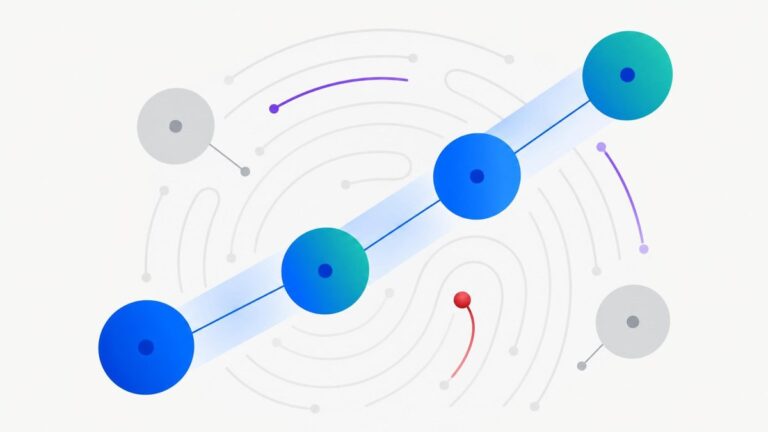

Predictive analytics uses AI and statistics to forecast what is likely to happen next. It studies patterns in historical data — sales, weather, customer behavior — and builds models that estimate future outcomes, like which customers might leave or how much stock a store will need next month.
How It Works
Think of an experienced shopkeeper who just “knows” that rainy weekends mean more soup sales and that December will clear the shelves of gift sets. Predictive analytics bottles that kind of intuition into mathematics. The system gathers historical data — past sales, customer actions, seasonal patterns, even weather — and hunts for relationships humans might miss.
Machine learning models then weigh thousands of these patterns at once to estimate what comes next. A model might learn that customers who stop opening emails, visit the cancellation page, and downgrade once tend to leave within two months — a pattern no human analyst would spot across millions of accounts. The model does not “know” the future; it calculates the odds from the past.
Before anyone trusts it, the model is tested on history it has never seen: it predicts a period the team already knows the answer to, and its accuracy is measured honestly. Only models that beat simple guesswork earn a place in real decisions. And good systems speak in probabilities — “a 70% chance this customer leaves” — leaving the final call to humans.
Why It Matters
Every business constantly bets on the future: how much to order, whom to hire, which customers need attention. Guessing wrong wastes money — overstocked warehouses, empty shelves, lost customers. Predictive analytics turns those bets from gut feelings into measured probabilities, so resources land where they are actually needed.
The applications stretch far beyond retail. Hospitals predict which patients risk readmission, factories predict machine failures before breakdowns halt production, and banks flag transactions likely to be fraud. Anywhere the past holds clues about tomorrow, prediction beats reaction.
Real-World Example
An online store keeps running out of its bestselling headphones every December, losing sales at the year’s most important moment. The owner tries predictive analytics: three years of sales data go into a model that forecasts demand week by week, factoring in holidays, promotions, and even how often the product page gets viewed.
The forecast says demand will spike in the second week of December — higher than last year. The owner orders accordingly, and the stock arrives in November. This December there are no empty shelves, no frantic reorders, no apologetic emails to customers. The only difference between this year and last is that someone did the math before ordering instead of after selling out.
Popular AI Tools
These no-code platforms bring predictive analytics to teams without data science departments:
- Pecan AI — predictive modeling for business teams, from churn prediction to demand forecasting.
- Obviously AI — turn a spreadsheet into predictions in minutes, no coding required.
- Akkio — a no-code AI platform for forecasting, classification, and lead scoring on your own data.
Frequently Asked Questions
Is predictive analytics the same as forecasting?
Forecasting is one application of predictive analytics — usually predicting numbers over time, like next quarter’s sales. Predictive analytics is broader: it also predicts categories and events, like which customers will churn or which transactions are fraudulent.
How accurate are these predictions?
It varies enormously by problem and data quality. Some predictions — like short-term demand for stable products — can be very accurate. Others, like predicting rare events, are educated estimates. Treat every prediction as a probability with a margin of error, never a certainty.
What data do you need to start?
More history is better, but you can start smaller than you think. A few hundred to a few thousand past records — customers, orders, transactions — with the outcome you want to predict is often enough for a first useful model. Clean, organized data matters more than sheer volume.
Can small businesses use predictive analytics?
Absolutely — this is exactly what no-code tools changed. A small shop with a spreadsheet of past sales can forecast demand or score leads without hiring a data scientist. The techniques were once enterprise-only; the tools above put them in everyone’s hands.