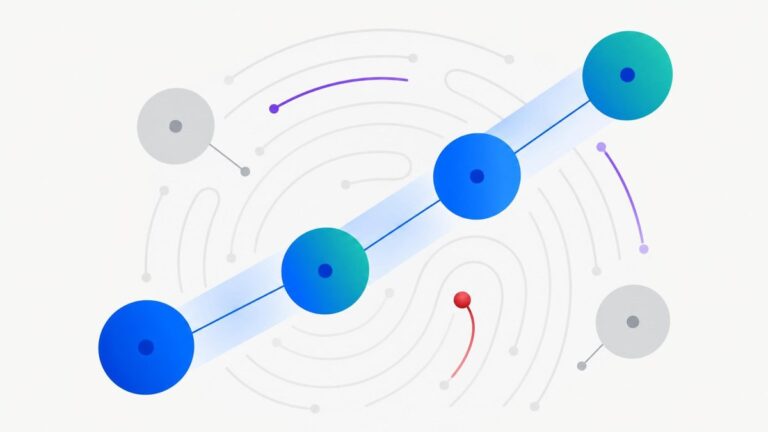

A foundation model is a large AI model trained on vast amounts of data that can be adapted to many different tasks. Instead of building a separate AI for every job, developers start with one foundation model and fine-tune it for chatting, writing, coding, or understanding images.
How It Works
Building a foundation model starts with an enormous appetite for data: huge collections of text, images, and code. During training, the model is not taught specific tasks. Instead, it plays a giant guessing game — predicting the next word in a sentence, or the missing part of an image — over and over until it develops a deep statistical sense of how language and the world fit together.
That general understanding is the “foundation.” Once trained, the model can be adapted. A technique called fine-tuning trains it a little more on specialized data — medical texts, legal documents, customer conversations — turning the generalist into a specialist. Another technique, instruction tuning, teaches it to follow human directions politely and helpfully.
The same foundation model can power wildly different products. One company’s chatbot, another’s coding assistant, and a third’s document summarizer might all run on the same underlying model, each fine-tuned differently. That is the economic magic: train once, at great expense, then reuse everywhere, cheaply.
Why It Matters
Foundation models matter because they changed who can build AI. Before them, every AI application needed its own model, its own dataset, and a team of specialists. Now a small startup can access a world-class model through an API and build a product in weeks. This is why AI features have exploded across nearly every app you use.
They also concentrate power and risk. Training a top-tier foundation model requires enormous computing resources, so only a handful of organizations can do it. That raises questions about who steers AI’s future — and about safety, since one model’s flaws can ripple across thousands of apps built on it.
Real-World Example
Imagine a small legal-tech startup with five employees. They want to build an AI that reviews contracts and flags risky clauses. Years ago, they would have needed AI researchers and enormous datasets. Today, they take an existing foundation model, fine-tune it on a few thousand annotated contracts, and ship a working product in a couple of months. The foundation model already understood language; the startup only had to teach it the specialty.
This pattern repeats everywhere: the base model supplies general intelligence, and a small team supplies the domain expertise. It is like hiring a brilliant graduate and training them for one specific role.
Popular AI Tools
The assistants below each run on a powerful foundation model: ChatGPT, built on OpenAI’s GPT models; Claude, powered by Anthropic’s Claude models; and Gemini, running on Google’s Gemini models.
Frequently Asked Questions
Is a foundation model the same as ChatGPT?
No — ChatGPT is a product built on top of a foundation model (OpenAI’s GPT). The foundation model is the engine; ChatGPT is the car. The same engine can power many different cars.
How big are foundation models?
The largest have hundreds of billions of adjustable settings called parameters, and training them requires thousands of specialized computer chips running for months. Smaller, efficient versions exist too, and they keep getting better.
Can anyone build a foundation model?
In theory, yes — the techniques are published. In practice, the computing cost puts top-tier models out of reach for most. But open-weights models let anyone download and adapt a pre-trained model for free.
Are foundation models safe?
They are powerful and imperfect: they can produce biased or false information and be misused. Developers add safety training and filters, and researchers keep working on reliability. Treat their output as a helpful draft, not gospel.