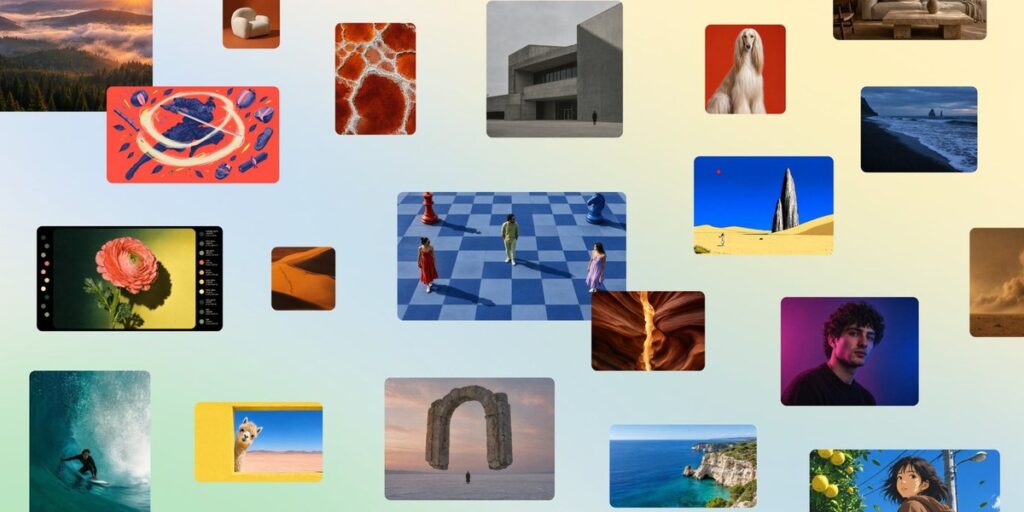
Canva has launched Canva Craft, its first image generation model built and trained from scratch by its in-house AI lab, Canva Research. It went live on October 22, 2026 for every Canva user inside Dream Lab, and for developers through the company’s public API.
Craft splits image generation in two: a planning model first writes a detailed layout plan — which elements appear, where they sit, their relative size, and any text — and a separate rendering model then turns that plan into a picture at up to 2K resolution in more than 30 aspect ratios. The company says planning first gives legible text, accurate object placement, and lets users edit one element without redrawing the rest. It renders text into images across 55 languages, and the layered output feeds Magic Layers, which converts flat images into editable design elements.
Unlike most image models trained mainly on photographs, Craft learned heavily from millions of human-designed templates in Canva’s own library: posters, social posts, presentations, infographics, menus, and typography-heavy layouts. Professional designers at Canva compared more than 25,000 image pairs against rival models during fine-tuning.
Canva says Craft debuted fourth on DesignArena’s crowdsourced image leaderboard, ranking first of 87 models for People & Portraits and first of 85 for Landscapes & Nature — ahead of entries from Google, Meta, xAI, and ByteDance, behind only OpenAI’s ChatGPT-powered image generation. The move has a cost logic too: after cutting its 2026 growth forecast amid high AI serving costs, Canva is betting that owning the model trims what it pays third-party providers. Researchers from Leonardo.ai, the Sydney startup Canva acquired in 2024, contributed to the work, and two cheaper variants, Craft-fast and Craft-ultrafast, are already in development — giving tools like Midjourney and Leonardo AI another design-trained rival.
Source: MadRobot