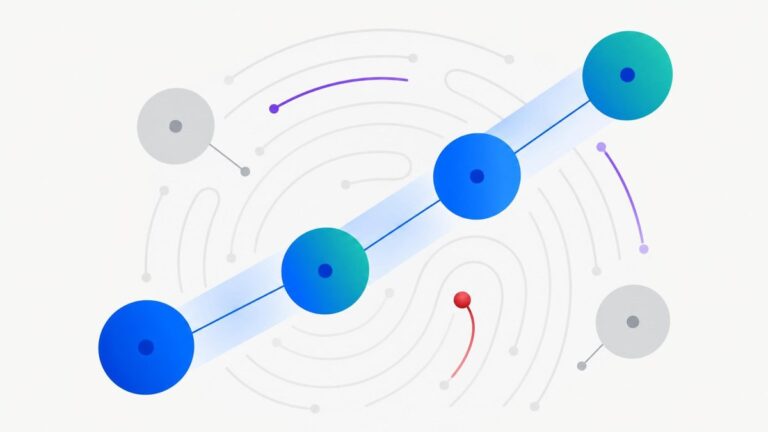

Deep learning is a type of machine learning that uses neural networks with many layers, which is where the 'deep' in the name comes from. Each layer learns progressively more complex features, from simple edges in an image to full objects and scenes. Deep learning powers today's biggest AI breakthroughs, including chatbots, image generators, and voice assistants.
How It Works
Imagine teaching a child to recognize a cat in photos. You would not start with “catness.” You would point out pointy ears, then whiskers, then the whole face. Deep learning works the same way. The first layer of the network detects simple edges and colors. The next layer combines those into shapes like circles and triangles. Deeper layers assemble parts, ears, eyes, fur patterns, until the final layer confidently declares “cat.”
The “deep” simply means many layers stacked together, sometimes dozens or hundreds. Each layer builds on the one before it, learning features of increasing abstraction. Training such a network means showing it enormous numbers of examples and letting it adjust millions of connections until its layered understanding becomes reliable. This training demands serious computing power, which is why graphics chips became the workhorses of AI.
Once trained, though, the network is fast. Recognizing the cat, transcribing speech, or generating the next word takes a fraction of a second. That split, slow expensive training, then cheap instant use, is the economic pattern behind nearly every AI product you use today.
Why It Matters
Deep learning is what made the modern AI boom possible. For decades, computers were blind and deaf to the messy real world; hand-written rules could not cope with the variety of photos, accents, and sentences. Deep networks cracked perception by learning directly from data, unlocking voice assistants, face unlock, real-time translation, and generative AI.
It also changed who builds intelligent software. Instead of encoding expertise as rules, teams collect examples and let the network discover the patterns. The price of admission is data and compute: deep learning is hungry for both, which is why the biggest models come from organizations with vast resources, while everyone else builds on top of their work.
Real-World Example
You are cooking with loud music playing when your voice assistant still hears “set a timer for ten minutes” perfectly. A deep learning model made that possible. During training it listened to thousands of hours of speech in every imaginable condition: noisy kitchens, car interiors, thick accents, mumbling teenagers. Layer by layer it learned to separate voice from background, sounds from syllables, syllables from words.
Earlier systems used hand-crafted rules about sound frequencies and failed in noise. The deep network simply learned what speech looks like across endless examples. The result feels like magic, but it is really just very deep pattern recognition, trained at a scale no human team could match by hand.
Popular AI Tools
- Runway – a deep-learning video platform that generates and edits video from text and images.
- Synthesia – creates realistic AI avatar videos using deep learning models trained on human speech and faces.
- Midjourney – the popular image generator built on deep neural networks that turn prompts into art.
Frequently Asked Questions
What is the difference between machine learning and deep learning?
Deep learning is a subset of machine learning. Machine learning is any system that learns patterns from data; deep learning specifically uses multi-layered neural networks, which excel at complex perception tasks.
How many layers make a network “deep”?
There is no official cutoff, but networks with more than a couple of hidden layers are generally called deep. Modern models often stack dozens or even hundreds of layers.
Does deep learning always need huge amounts of data?
Training from scratch does, but techniques like transfer learning let smaller projects start from a pre-trained deep network and adapt it with far less data.
What can deep learning not do well?
It struggles with tasks needing true reasoning, common sense, or very little data. It also learns correlations rather than causes, which is why it can be confidently wrong.