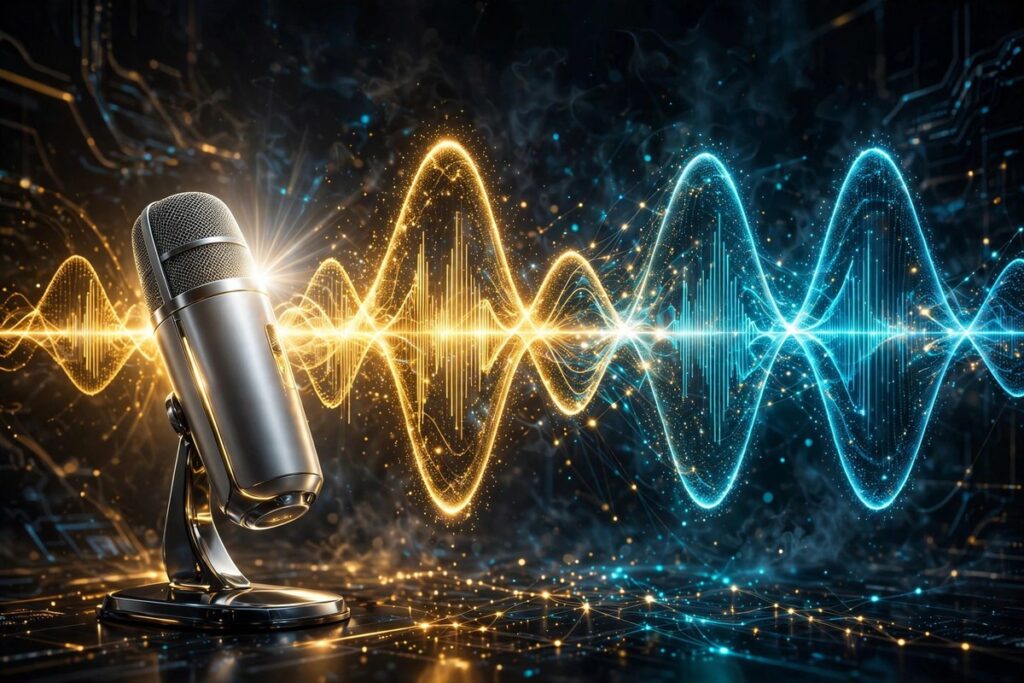
Voice cloning is AI technology that copies a person's voice from a short audio sample and then makes that voice say anything you type. The model learns the unique tone, pitch, and rhythm of the speaker, so the generated speech sounds remarkably like the original — useful for creators, but risky in the wrong hands.
How It Works
Think of a vocal impressionist who studies recordings of a celebrity until the imitation is uncanny. You provide a short sample — sometimes just seconds — of the target voice. The model analyzes what makes it distinctive: pitch range, speaking pace, accent, breathiness, and emphasis patterns. From this it builds a “voice print,” a compact numerical description of how that person sounds.
Then a text-to-speech engine uses that voice print as its instrument. When you type new words, the engine generates speech and shapes it with the cloned characteristics, so the output sounds like the original speaker saying something they never actually said. The words are new; the voice carrying them is borrowed.
Quality depends heavily on the sample. Clean, varied recordings — different emotions, natural pacing — produce convincing clones, while noisy or monotone samples produce flatter results. The striking part is how little audio the best systems need now, which is exactly why the technology impresses and worries people in equal measure.
Why It Matters
The legitimate uses are genuinely exciting. People losing their voice to illness can bank it and keep speaking in their own sound. Creators can dub content into languages they do not speak. Audiobook producers can narrate entire libraries without booking studio time. For accessibility and creativity, voice cloning is a breakthrough.
The dark side is serious. Scammers clone a family member’s voice to fake emergency calls asking for money. Fake audio of public figures spreads misinformation. That is why reputable tools require consent verification, add audio watermarks, and ban impersonation — and why you should treat any surprising voice message asking for money or secrets with deep skepticism.
Real-World Example
A podcaster with a growing audience wants to release episodes in Spanish, but she does not speak the language. She records a voice sample, clones her own voice, and types up translated scripts. Within days she publishes Spanish episodes that sound like her — same energy, same laugh, same warmth — reaching listeners she could never have addressed before.
Her audience doubles, and sponsors follow. She did it with her own voice and her full consent, which is exactly how the technology is meant to be used: amplifying a real person’s reach rather than faking someone else’s identity. The line between those two uses is the whole ethical debate in one sentence.
Popular AI Tools
These platforms lead the field in realistic, controllable voice cloning:
- ElevenLabs — the best-known voice AI platform, famous for natural-sounding clones from very short samples.
- Respeecher — high-quality voice cloning widely used in film, gaming, and media production.
- Kits AI — popular with musicians and creators for cloning singing as well as speaking voices.
Frequently Asked Questions
Is voice cloning legal?
Cloning your own voice, or someone else’s with their clear permission, is generally fine. Cloning someone without consent — especially to deceive — can break fraud, impersonation, and privacy laws in many places. When in doubt, get written permission first.
How much audio is needed to clone a voice?
Modern tools can produce a recognizable clone from under a minute of clear audio, and excellent ones from a few minutes. More varied, high-quality audio still gives better results, but the barrier has dropped dramatically.
Can cloned voices be detected?
Sometimes. Detection tools look for subtle artifacts in the audio, and many cloning platforms embed inaudible watermarks. But detection is an arms race — as cloning improves, so must detection. Never rely on your ears alone for anything involving money or security.
What are legitimate uses of voice cloning?
Preserving the voices of people with degenerative conditions, dubbing content into other languages, narrating audiobooks, restoring historical recordings, and giving game characters unique voices — all with proper consent from the voice owner.